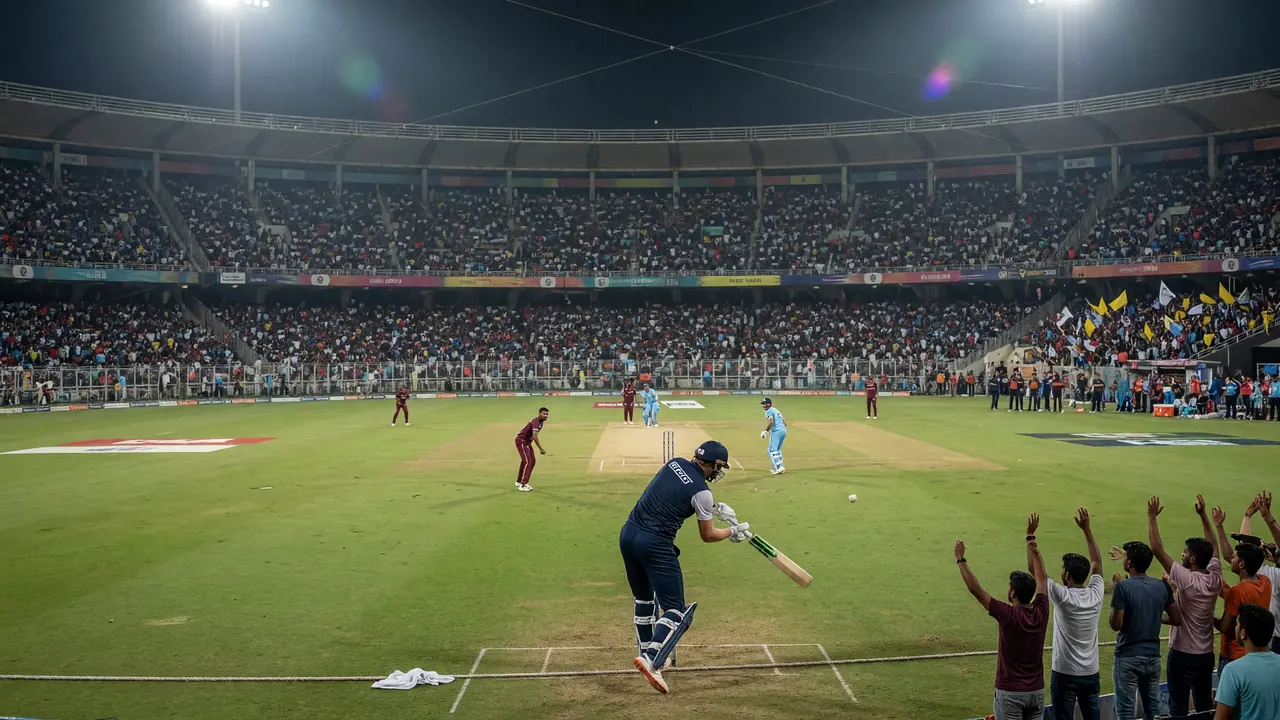
On Sunday, 12 April 2026, Gujarat Titans beat Lucknow Super Giants by seven wickets in an Indian Premier League match at Ekana Stadium in Lucknow. The result is fixed in the record: Lucknow were held to 164 for 8, Gujarat chased 165 with eight balls remaining, and Jos Buttler's 60 off 37 balls sat at the centre of the reply.
This piece is a retrospective. The match is no longer a live fixture. The facts below come from the contemporary match report published that evening by The Daily Star, and they are set down here as a clear account of what happened rather than as breaking coverage. For readers who still use the night as a reference point for captain form, bowling match-ups or chase patterns, the sequence remains useful months later.
Gujarat invited Lucknow to bat. That decision shaped the rest of the evening. Prasidh Krishna returned 4 for 28, described in the original report as his T20 best, and Lucknow finished short of a total that would have forced Gujarat into a genuine scramble. Aiden Markram top-scored with 30 for the home side. Several other Lucknow batters made starts and failed to convert them, which left the innings looking busy without ever looking heavy.
How Lucknow were held to 164 for 8
Bowling first on a Lucknow surface often tempts captains who trust their pace attack to take early wickets and then squeeze the middle overs. Gujarat's path that night ran through Krishna. Four wickets for 28 is a T20 spell that does two jobs at once: it removes set batters and it keeps the run rate under enough pressure that the batting side cannot trade wickets for acceleration without risk.
Markram's 30 was the highest individual score in the Lucknow innings. That detail matters because it shows how little conversion the rest of the order managed. In a full T20 innings, a top score of 30 usually means the innings was stitched together from short contributions. Those innings can still reach competitive totals when boundaries arrive in clusters. On 12 April they did not. Gujarat closed the innings at 164 for 8, which left a chase target of 165.
From a fantasy and match-reading angle, the bowling card is the cleaner half of the night. Krishna's figures are the single clearest bowling line on the sheet. Everything else about Lucknow's batting sits under one heading: starts without a long stay. That is why the chase never needed a late explosion. Gujarat only had to keep wickets in hand and bat through the middle overs with intent.
Buttler and Gill build the chase
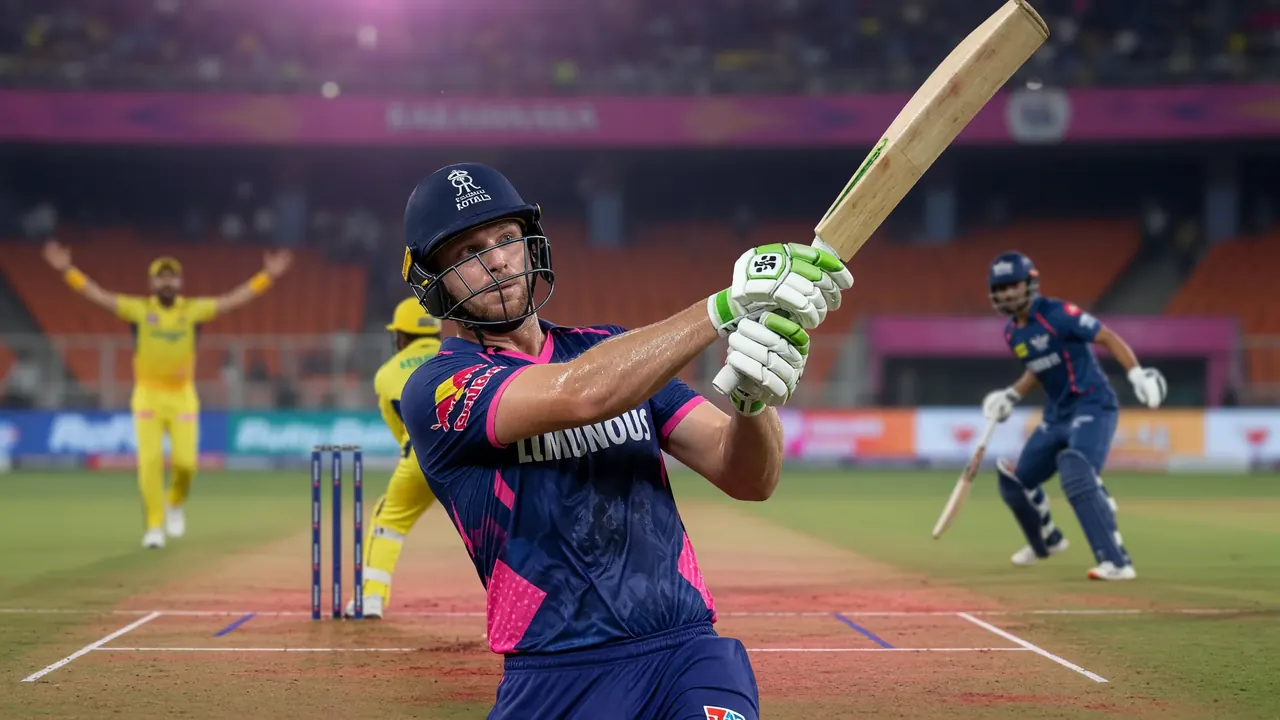
Gujarat's reply was built around two half-centuries. Jos Buttler scored 60 off 37 balls with 11 fours. Captain Shubman Gill made 56. Together they added 84 for the second wicket. That partnership is the spine of the chase. Once a second-wicket stand of that size is banked against a target in the mid-160s, the batting side is usually chasing a required rate that can be managed without inventing a new gear every over.
Buttler's innings was his second successive IPL half-century. The previous game had produced a match-winning 52. The Daily Star report placed those two knocks against a longer lean stretch that included England's T20 World Cup campaign, where Buttler scored only 87 runs in eight matches as England lost the semi-final to India. He was 35 at the time of the Lucknow match. The form story, then, is not a sudden overnight transformation; it is two clean IPL innings after a lean international block.
After the win, Buttler spoke about that lean patch directly. He said he had been through a difficult couple of months and that it was good to play some strong games again. He also described technical issues that had stopped him seeing the ball as well as he wanted, and said he had been concentrating on everything before delivery. The final line in that sequence was practical rather than dramatic: after 15 years in the game, he knew what to do once he was set. Those remarks sit in the public record as his own account of the form recovery, not as outside analysis.
Gill's 56 was his second straight half-century as well. The captain's contribution matters for more than the scoreboard. In a chase built on a long second-wicket stand, the captain's calm tempo keeps the required rate honest and protects the lower middle order from having to invent a finish under pressure. For most of the partnership, Gujarat looked like a side batting to a plan rather than reacting to each Lucknow over.
The brief window when Lucknow pushed back
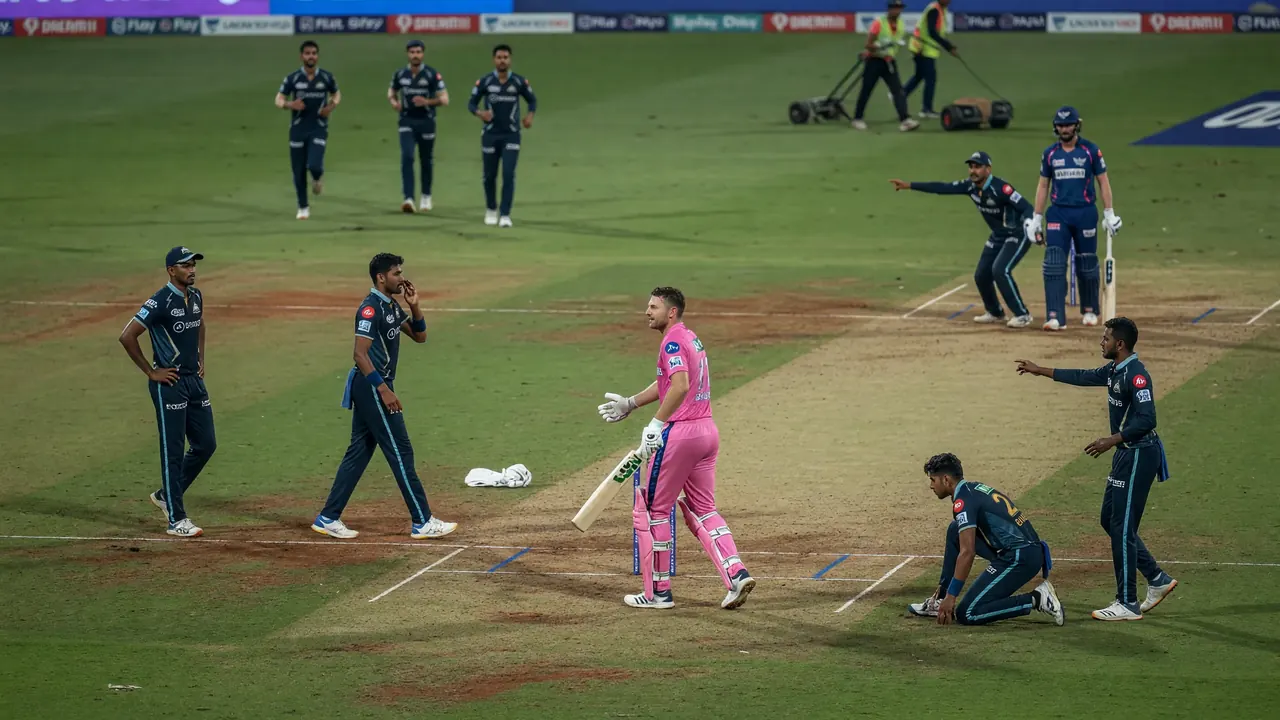
The chase was not entirely smooth. Mohammed Shami dismissed Buttler with a slower ball. Gill and Buttler then fell within six deliveries of each other. That short burst raised Lucknow's hopes because it removed both half-centurions in a tight window and opened the middle of the innings while the target was still unfinished.
Those two wickets are the clearest counter-passage in the match. Up to that point, Gujarat had controlled the reply. After it, the question was whether the lower middle order would freeze or finish. Washington Sundar and Rahul Tewatia answered it. Sundar finished unbeaten on 21. Tewatia scored 10. Gujarat closed the chase in 18.4 overs, eight balls inside the full allocation, and won by seven wickets.
The finish is worth keeping in proportion. Sundar and Tewatia did not have to manufacture a high-risk assault. They had to keep the board moving after two set batters had already done the heavy lifting. In T20 chase language, that is a completion job rather than a rescue. The margin — seven wickets and eight balls to spare — shows how much of the work had already been done before the double breakthrough.
What the scorecard still says
Stripped of colour, the public record from 12 April 2026 is compact. Venue: Ekana Stadium, Lucknow. Result: Gujarat Titans beat Lucknow Super Giants by seven wickets. Lucknow: 164 for 8. Gujarat chase: 165, completed in 18.4 overs. Buttler: 60 off 37 with 11 fours. Gill: 56. Second-wicket stand: 84. Sundar: unbeaten 21. Tewatia: 10. Krishna: 4 for 28. Markram: 30. Shami: the slower ball that removed Buttler. Those numbers are the ceiling of what this retrospective claims.
The original report also fixed Buttler's wider context. He had scored 87 runs in eight T20 World Cup matches. England had exited in the semi-final against India the previous month. His IPL half-centuries arrived after that lean stretch, not before it. Reading the Lucknow knock without that background turns a form recovery into a one-off highlight. Reading it with that background explains why the post-match comments focused on technical cleanup and pre-delivery routines rather than on celebration language.
Nothing in the source material supplies a full ball-by-ball log, a powerplay breakdown by over, or an official points-table snapshot after the fixture. Those details are outside the verified record used here. Where the report is silent, this article stays silent. The value of a retrospective is precision, not invented completeness.
Fantasy reading of a finished match
For fantasy players who still study finished IPL nights as templates, three lines from 12 April remain instructive. First, a bowler who returns four wickets in a modest total is often the highest pure bowling return on the card, especially when the opposing top score is only 30. Second, successive half-centuries from an opener or top-order batter change selection confidence more than a single flashy knock, because the second fifty reduces the chance that the first was pure variance. Third, a chase that survives the loss of both set batters still needs named finishers; Sundar's unbeaten 21 and Tewatia's 10 are the proof on this sheet.
Captaincy math on the night would have split between Buttler and Gill for batting returns and Krishna for bowling. The safer historical read is that Gujarat's top order produced the bulk of the chase points while Krishna produced the bowling spike. None of that is a recommendation for a future contest. It is a reconstruction of how the points would have clustered on the night the match was played.
Readers who want the broader season frame, schedule context and longer IPL 2026 desk notes can find that continuing coverage under IPL 2026. This retrospective stays inside one fixture and the facts attached to it.
Why the night still matters in the season archive
IPL seasons are dense. Individual league nights blur unless a match leaves a clean shape. The Lucknow fixture left three clean shapes. Gujarat won bowling first and chasing with room to spare. Buttler produced a second straight fifty after a lean international block. Krishna produced a career-best T20 return that defined the first innings. Those three shapes are why the night still works as a reference match rather than as disposable mid-season noise.
There is also a leadership detail that sits quietly inside the scorecard. Gill's own second straight fifty meant the captain was not merely managing the chase from the dugout or from a watching brief; he was one of the two batters building it. When a captain contributes a half-century in a successful chase, the tactical story and the batting story stop being separate files. On 12 April they were the same file for long enough to decide the contest.
Lucknow's side of the archive is less flattering and more familiar. Starts without conversion is a common T20 failure mode at home and away. Markram's 30 as top score is the statistical marker of that failure. Shami's slower ball to Buttler was the one genuine bowling highlight in the second innings, and even that moment arrived too late to change the required-rate arithmetic in a lasting way once Sundar and Tewatia settled.
Buttler's form arc, kept inside the evidence
Form narratives are easy to overbuild. The evidence here is narrower and stronger when left alone. Buttler had a lean T20 World Cup. He then produced back-to-back IPL half-centuries, including 60 off 37 with 11 fours in Lucknow. He attributed the recovery to cleaning up technical issues and focusing on pre-delivery routines. He did not claim a permanent fix, and this retrospective does not invent one. The useful present-day relevance is simply that the Lucknow knock sits as a documented high point in that short recovery sequence.
Eleven fours in a 37-ball sixty is a boundary-heavy method. It tells you the innings was built on timing and placement more than on a late surge of sixes. Against both pace and spin, the original report said he looked fluent until Shami's slower ball. Fluency is a soft word in cricket writing, but here it is tied to a concrete dismissal method: the slower ball ended the knock, not a pace bouncer or a spinning delivery that beat the bat earlier.
For readers comparing Buttler's franchise form with his international lean patch, the correct method is still chronological. The World Cup numbers came first. The IPL fifties came after. The post-match comments explained the bridge between them from the player's own mouth. Anything beyond that — projected averages, claimed technical blueprints, or assumptions about later matches — would be speculation, and it is left out.
A compact timeline of the night
Gujarat won the toss decision in practical terms by bowling first. Krishna's four-wicket spell kept Lucknow to 164 for 8, with Markram's 30 the high score. Gujarat's chase opened into an 84-run second-wicket stand between Buttler and Gill. Both men reached half-centuries. Shami removed Buttler with a slower ball, and Gill fell in the same six-ball window. Sundar and Tewatia finished the chase in 18.4 overs. Gujarat won by seven wickets. That is the whole public arc.
Retrospectives earn their keep when they stop at the edge of the evidence. The 12 April 2026 meeting in Lucknow remains a clean example of a side defending a modest total poorly and a chasing side absorbing one short burst of pressure without losing control. Buttler's sixty is the headline performance. Krishna's four-for is the supporting pillar. Gill's fifty is the captain's share. The rest is completion.
Months later, the legacy of the night is modest and specific. It is a reference scorecard for Gujarat's early-season chase control, a documented marker in Buttler's form recovery after the T20 World Cup, and a reminder that a top score of 30 rarely builds a total that survives quality top-order batting. Those three readings are all the present-day relevance the verified record supports.